


SHABBAT DATE
Jul 31, 2027
Numbers 30:2–36:13
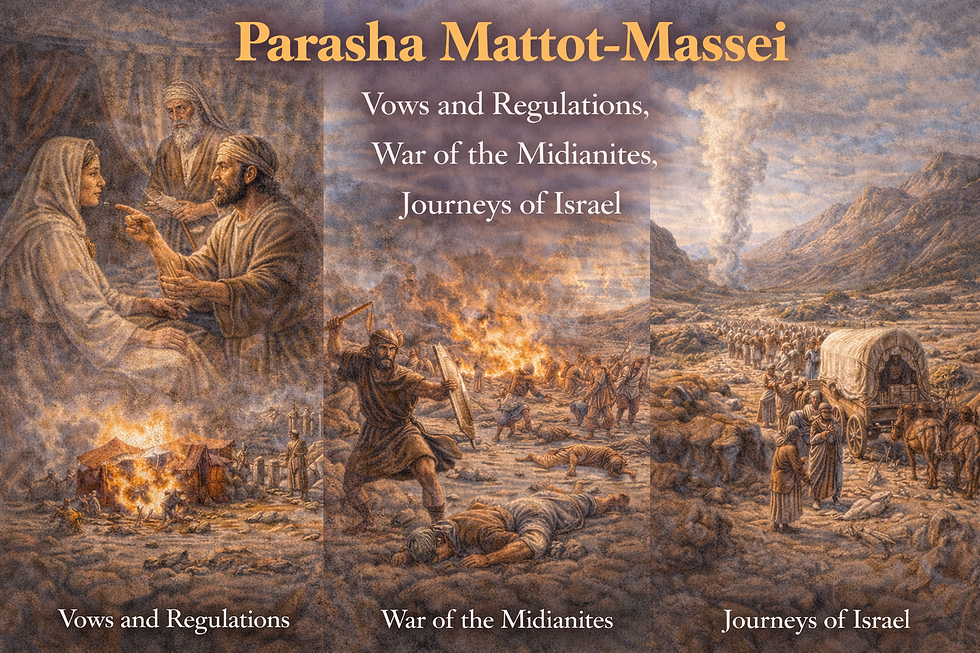
Laws on vows, war against Midian, Transjordan tribes settle.
Parashat Matot-Masei (מַּטּוֹת־מַסְעֵי – “Tribes / Journeys”)
Numbers 30:2–36:13 (In some traditions, Matot and Masei are read separately; here they are combined as often in the annual cycle.)
1. Laws Concerning Vows
Numbers 30:2–17 (Hebrew 30:3–17)
The parashah opens with laws regarding vows and oaths, emphasizing the sanctity of one’s word.
A vow made to God must be fulfilled. If a woman makes a vow, her father or husband may annul it if he does so promptly (30:3–16).
“He shall not break his word; he shall do according to all that proceeds out of his mouth.” – Numbers 30:2
2. War Against Midian
Numbers 31:1–54
God commands Israel to execute judgment against the Midianites for leading Israel into idolatry and immorality at Baal Peor (see Num. 25).
12,000 men (1,000 from each tribe) go to war, led by Phinehas.
Balaam the sorcerer is killed (31:8), and Midianite cities are destroyed.
The spoils are divided between the soldiers, the congregation, and the Levites, and a portion is given to the Lord.
3. The Transjordan Tribes Settle
Numbers 32:1–42
The tribes of Reuben and Gad, and later half of Manasseh, request to settle east of the Jordan River, where the land is good for livestock.
Moses initially rebukes them, fearing a repeat of the sin of the spies, but they promise to help conquer Canaan before settling.
Their request is granted with conditions. Cities are built east of the Jordan for their families and flocks.
4. Summary of Israel’s Journeys
Numbers 33:1–49
A detailed list of all 42 encampments of the Israelites from Egypt to the plains of Moab.
Each stage of the journey is recorded as a testimony of God’s guidance.
5. Instructions for Conquering Canaan
Numbers 33:50–56
God commands Israel to drive out the Canaanites, destroy their idols, and divide the land by lot.
If Israel fails to remove them, the Canaanites will become a thorn in their side and a snare.
6. Boundaries and Tribal Leaders
Numbers 34:1–29
God provides a geographic description of the land’s boundaries.
He appoints leaders from each tribe to oversee the division of the land, with Eleazar the priest and Joshuasupervising the process.
7. Cities of Refuge and Levite Cities
Numbers 35:1–34
The Levites are given 48 cities, including six cities of refuge, where one who kills unintentionally may flee for protection.
Clear distinctions are made between intentional murder and accidental manslaughter.
“You shall not pollute the land in which you are… for blood pollutes the land.” – Numbers 35:33
8. The Daughters of Zelophehad Revisited
Numbers 36:1–13
The tribal leaders of Manasseh raise concerns about the inheritance given to the daughters of Zelophehad.
God commands that women who inherit land must marry within their tribe, so land remains within tribal boundaries.
Messianic Insights
The cities of refuge prefigure Messiah Yeshua as our place of safety and mercy from judgment (Hebrews 6:18).
The summary of Israel’s journey reminds us that God is present in every step—even the wilderness has divine purpose.
The war against Midian reveals God's justice, while the careful distribution of land and inheritancedemonstrates His order and covenant faithfulness.
The completion of the journey in Masei sets the stage for entering the Promised Land.
This double portion concludes the Book of Numbers. As is customary: Chazak, chazak, v’nitchazek – Be strong, be strong, and may we be strengthened!